
ScreenLoop: The Screen in the Corner Is Still Showing Christmas
Posted: 2026 | Category: Digital Signage
The Tuesday Where the Screen Lies
It is March. The screen above the counter is advertising a Christmas promotion.
Everyone in the building has seen it. Nobody has fixed it, because fixing it means finding the person who knows the password, who set it up in 2023 with a USB stick and a media player nobody has touched since. The USB stick is somewhere. Possibly in a drawer. Possibly at the branch in Kortrijk, which also has a screen, which is showing a “loading” spinner and has been for a fortnight.
You paid real money for those displays.
They are now expensive furniture that actively misinforms your customers.
Why Screens Rot
Digital signage fails in three predictable ways.
Updating is manual, so it stops happening. If changing the content requires physical access, a cable, or a specific laptop, the content will be changed twice and then never again.
Nobody can see what a screen is doing. A display in another town is a black box. Is it on? Is it showing the right playlist? Did it crash at 06:00 and never come back? You find out when a customer mentions it.
Nobody can prove it works. Marketing asks whether the in-store screens do anything. There is no answer, so the budget quietly moves to something measurable.
Then the enterprise vendors quote you a per-screen licence, a media player appliance per display, and a rollout, and you decide the Christmas promotion is fine actually.
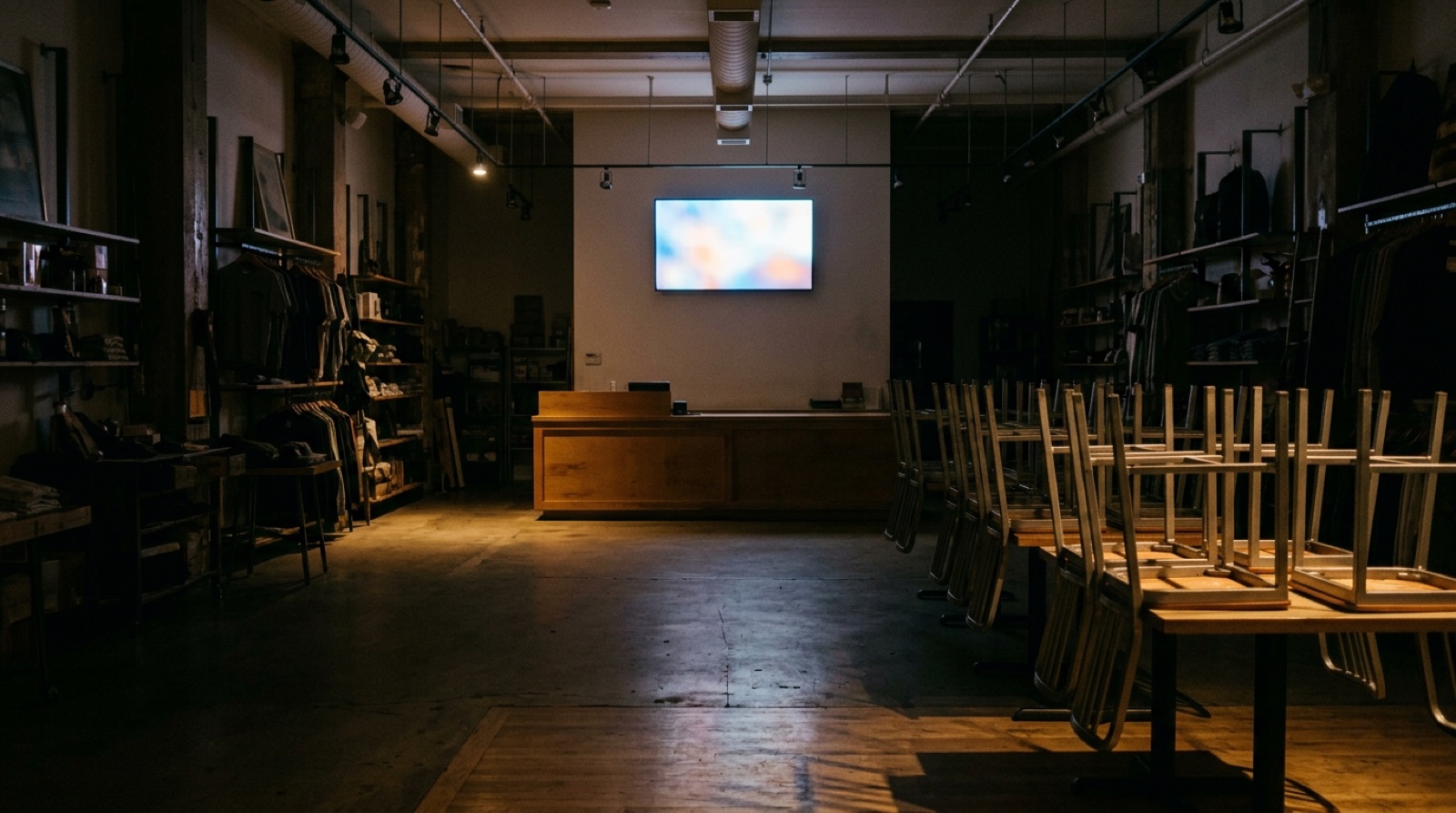 A screen nobody can reach quietly turns into the oldest thing in the room.
How We Glued It Shut
ScreenLoop manages screens, content and layouts across locations, from a browser, with hardware you probably already have.
Pairing takes ten seconds. Open /player on the display device. It shows a six-character code. Type that code in the dashboard. The screen starts showing content. That is the whole installation. Any device with a browser will do: a smart TV, a small PC, a tablet, whatever is already screwed to the wall.
Locations, then screens. Screens live under physical locations, so “all the screens in the Ghent shop” is a thing you can address instead of a list you maintain in your head.
Layouts are zones, edited visually. A layout is an arrangement of zones on a screen, built by dragging with a live preview. Four zone types cover most of what a screen needs to do: a playlist zone that rotates content, a clock zone with a format you choose, a ticker zone for scrolling announcements, and an image zone for a static logo or frame. So a screen can show a promotion, the time, and a running message at once, without anyone editing a video.
Playlists are the content. Content items go into playlists with their own duration and order. Change the playlist and every screen using it changes. No walking to the counter.
Campaigns with dates, targets and approval. A campaign carries a creative, a display duration, a start and end date, and a set of target locations. It moves through an approval step before it goes live, with a rejection reason when it does not. It stops on its own when the end date passes, which is the feature that would have prevented the Christmas problem.
QR tracking, so the screen can be measured. Campaigns and content items carry QR codes with tracking codes. Scans are recorded per campaign and per location. That turns “do the screens do anything” from an argument into a number, broken down by shop.
The player is built to be left alone. Real-time content updates, multi-zone rendering, offline resilience when the network drops, and an error boundary so one bad content item does not take the whole display down. Screens send heartbeats, so the dashboard knows which ones are alive without anyone driving to Kortrijk.
Brands and AI-generated creative. A brand holds your logo, colours, fonts, voice and guidelines. From there ScreenLoop can generate on-brand images from a prompt, in landscape or portrait at the right dimensions, into a staging gallery you review before anything reaches a screen. It is for the Tuesday where you need a decent-looking notice by Wednesday and the designer is on holiday.
Multi-tenant from the ground up. Workspaces with complete data isolation, admin, user and viewer roles, and media stored in S3-compatible object storage.
Who This Unsticks
Retail with more than one shop. Change a promotion once, see it on every screen in every branch, and know which ones actually received it.
Hospitality. Menus, opening hours, the day’s specials. A ticker zone is easier than reprinting.
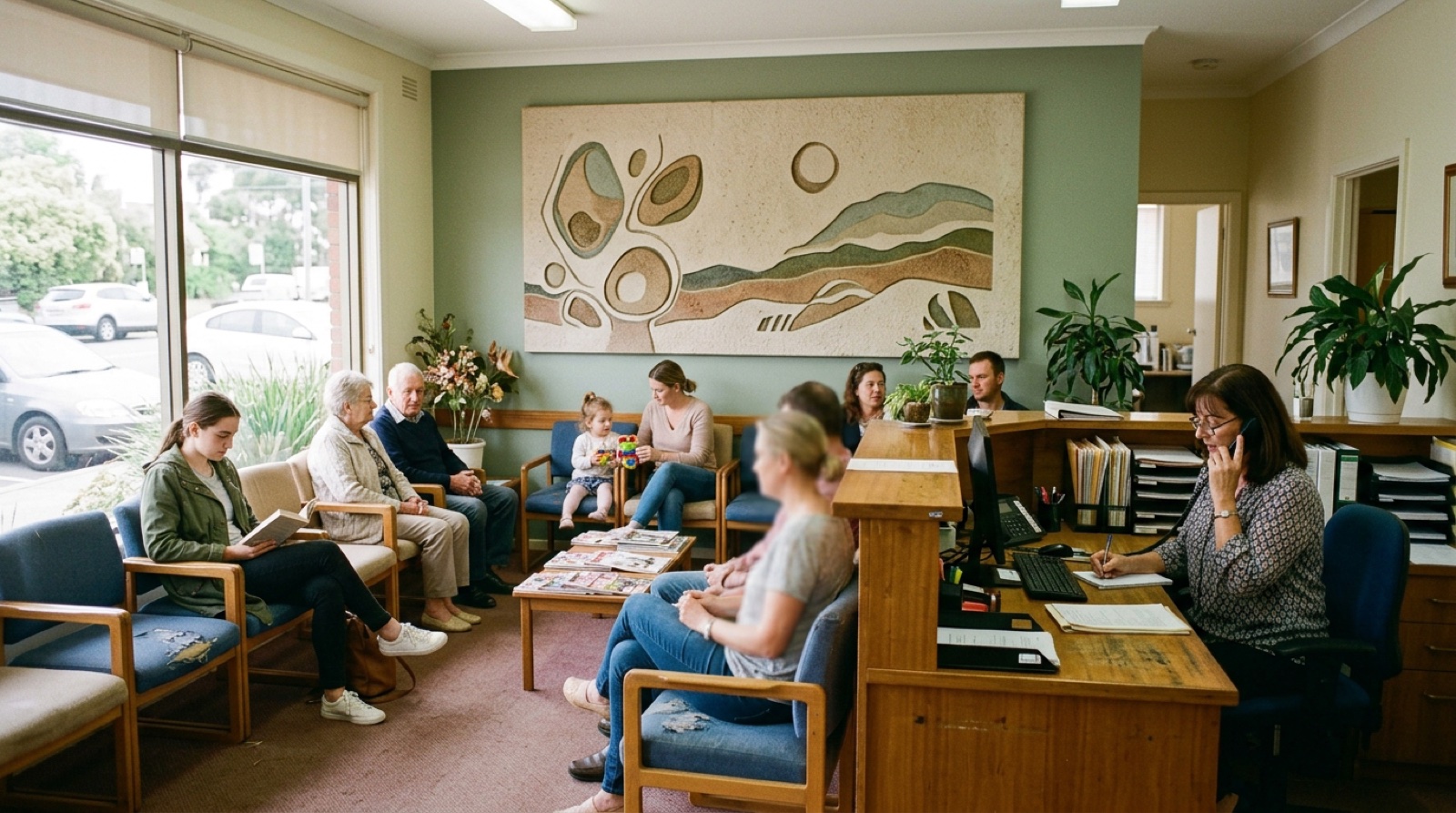 Most screens are set up once, by someone who then goes back to their real job.
Waiting rooms and reception areas. Practices, garages, town halls. A clock, a queue message and a rotating information playlist, set up once by someone who then goes back to their real job.
Anyone with an unmanaged screen. If your current signage strategy involves a USB stick, this is a strict improvement.
What Makes This Different
The signage industry mostly sells appliances. A proprietary media player per display, a licence per player, and a support contract for the privilege.
ScreenLoop is a web app and a browser player.
- No dedicated hardware to buy, the display’s own browser is the player
- No per-screen appliance and no rollout project
- Pairing by six-character code, not by site visit
- QR tracking built in, so the screens can justify themselves
- Self-hostable, with your media in your own object storage
Get Started
Is one of your screens still showing something from last season? Do you know, right now, whether the display in your other branch is even switched on?
Visit screenloop.glue.blue, pair one screen, and find out.
ScreenLoop is built by glue.blue - we stick solutions to problems. Permanently.
Ready to make your screens tell the truth? → Get Started → Contact Us
Posted in: Digital Signage, Retail, Marketing, Self-Hosted